
Powering Thailand's AI Future: The Critical Role of HVDC Rectifier Cabinets in Energy Metering and DC Insulation Monitoring
Aug 17, 2026
Thailand is rapidly emerging as Southeast Asia’s next digital powerhouse. With AI workloads exploding and cloud adoption accelerating across the region, the kingdom is witnessing an unprecedented data center construction boom. Yet beneath this wave of investment lies a fundamental challenge: how to power the next generation of ultra-dense compute infrastructure with maximum efficiency and uncompromising safety.

The Thailand Data Center Boom: By the Numbers
As of the second quarter of 2026, the country has 216 MW of operational data center capacity, with an additional 944 MW currently under construction or in the planning pipeline — more than four times the existing capacity
However, this rapid expansion comes with a catch. The Thai government has established a dedicated “Data Center Business Policy Committee” to oversee the industry’s growth, with a particular focus on managing its impact on electricity, water resources, and the environment.
More critically, the BOI now requires new data center projects to achieve a Power Usage Effectiveness (PUE) of 1.3 or lower to qualify for maximum corporate income tax exemptions
The Industry Pain Point: Why Traditional AC Power Falls Short
The conventional AC UPS architecture, with its “AC-DC-AC” double-conversion process, is showing its age. Energy losses accumulate at every conversion stage, PUE targets become harder to meet, and the physical footprint of traditional power distribution equipment consumes valuable floor space that could otherwise house revenue-generating IT equipment
The HVDC Solution: A High-Efficiency Engine for the Digital Economy
High Voltage Direct Current (HVDC) systems are emerging as the transformative answer to these challenges. The power supply voltage is moving from the mainstream 240V to ±400V and even 800V high voltage. By increasing the voltage and reducing the current, distribution losses and copper usage are further reduced.Unlike traditional UPS systems that require double conversion, HVDC rectifier cabinets employ a single-stage “AC-DC” conversion architecture, eliminating the inverter stage entirely

Precision Energy Metering: Making Every Watt Count
In modern data centers, HVDC system losses account for approximately 11% of total energy consumption.This makes accurate energy metering not just a compliance requirement but a cornerstone of operational excellence
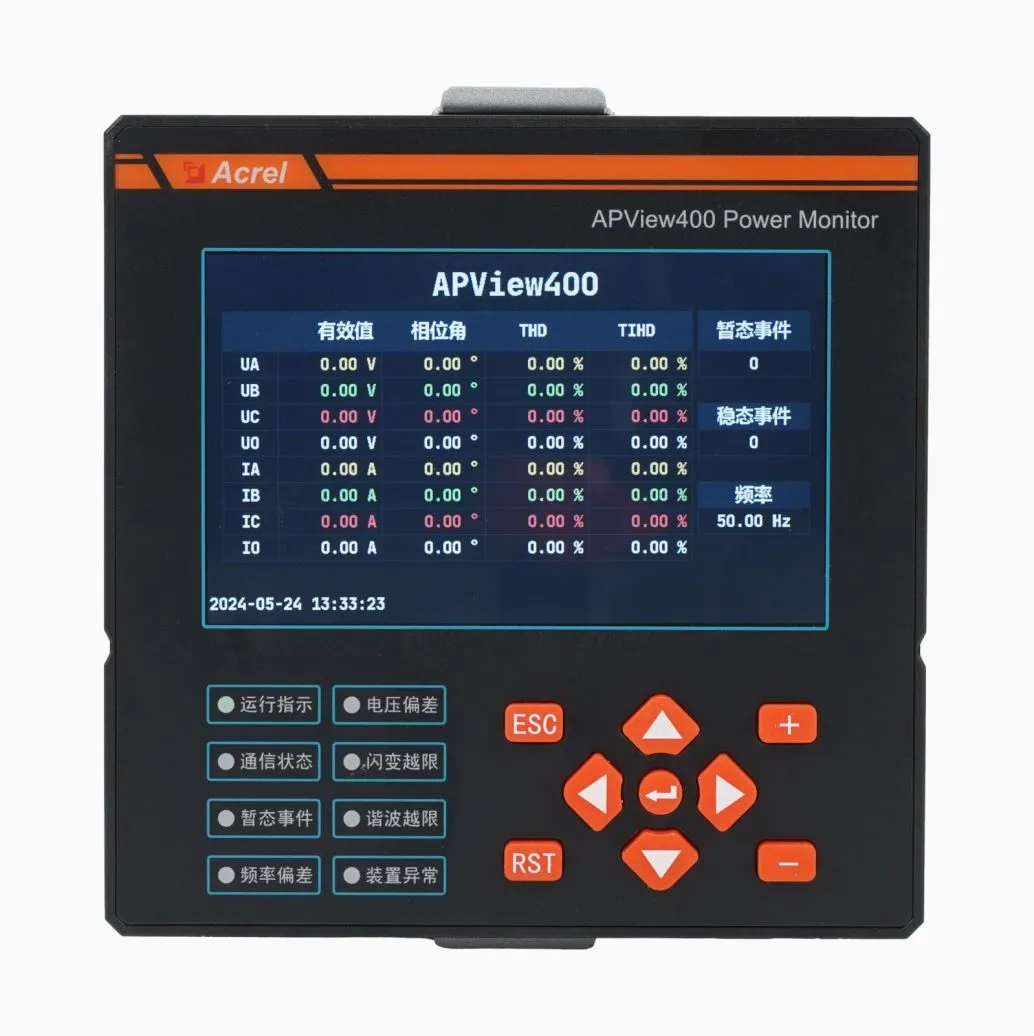
At the AC input side, advanced network power quality analyzers &power meters— such as the APView series,APM521 power meters — provide Class 0.2 voltage and current accuracy with Class 0.5s active energy precision.
.webp)
(Click picture to check details)
These instruments support full power parameter measurements (voltage, current, active/reactive/apparent power, power factor, frequency), bidirectional energy metering, power quality analysis including voltage/current imbalance and phase angles, and comprehensive data logging with alarm and event recording capabilities
At the DC output side, the high-precision DIN rail DC energy meter (DJSF1352) plays a crucial role.

(Click picture to check details)
It achieves centralized data acquisition from dozens of circuits via an RS485 bus, accurately measuring the DC voltage, current, power, and forward and reverse energy output from the rectifier module. This not only achieves high-precision metering without increasing space requirements but also helps maintenance personnel monitor the power module's output status in real time, facilitating rapid fault location.
High-voltage direct current (HVDC) possesses inherent physical characteristics such as strong continuity and difficulty in extinguishing electric arcs, necessitating the highest level of electrical safety in HVDC rectifier cabinets. In addition to conventional overcurrent, overvoltage, and arc-proof physical designs, DC-side insulation safety is paramount. Therefore, HVDC rectifier cabinets are equipped with a standard DC insulation monitoring instrument (AIM-D) as a key device to ensure the safe operation of the system.

(Click picture to check details)
HVDC systems typically employ high-resistance grounding on the DC side. A DC insulation monitor can continuously monitor the insulation status of the DC bus and its branches in real time. It measures the resistance to ground of both positive and negative poles in real time using high-precision sensors. When the insulation resistance falls below a set safety threshold, it immediately issues an audible and visual alarm and uploads the fault information to the integrated automation system. This online real-time monitoring mechanism can detect single-point grounding faults before they escalate into serious short-circuit accidents, completely eliminating the risks of leakage and corrosion.


Recent Posts




Contact US
Product Information
Quantity
Unit
Piece
Support order samples, customization, wholesale direct, and complete payment. If the product you look for does not have corresponding customized content, pls fill out the form below to contact us, and we will reply ASAP.